Keep Score of Goals and Action Steps

How do you know how well your team is doing during a competitive game? You see what the score is. Likewise in coaching. A coach and coachee will know how much progress there is by keeping score of the goals and action steps. This is why action steps should be clear and measurable so people can know how close, or far, from the goal they are with a glance.


An essential component for letting people keep their eyes on their goals is a scorecard. In keeping score, people are encouraged to stay the course and motivated to achieve more. This drive for moving towards the prize is known as “structural tension” that resides in the mind. The tension is created due to the gap between where people are and where they want to be.


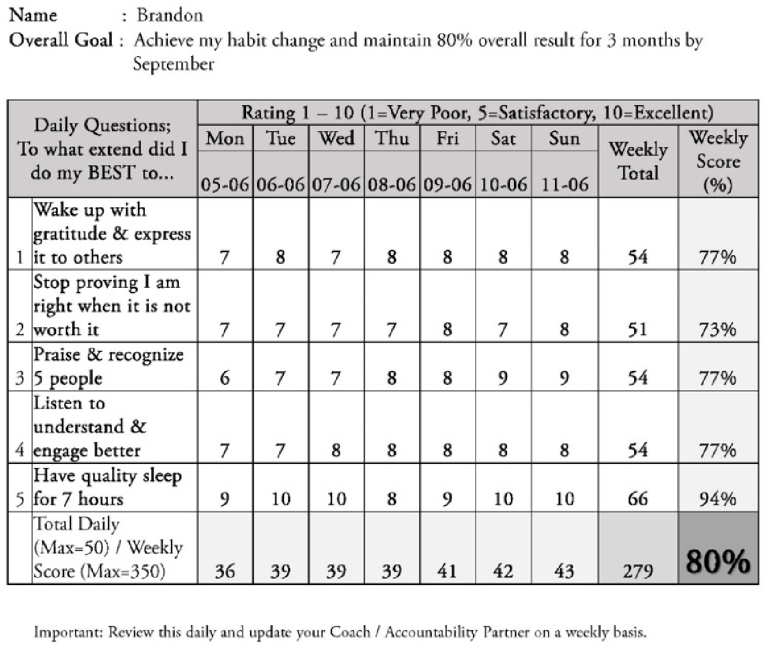
Possessing that tension drives people towards find solutions and taking action. They become more receptive to available resources and support and generate creative solutions to address the issues faced to relieve that structural tension in the mind. For example, Brandon used the Daily Active Questions (DAQ) technique espoused by World #1 Executive Coach Dr Marshall Goldsmith to create a scorecard that keeps track of the habits he wants to change.


As you can see, Brandon’s scorecards tells him, and anyone who looks at it, three important things:

  1. What is important to him;
  2. How well he is doing;
  3. The progress he is making;

The scorecard enables him to monitor his performance and supports him to stay on track for meeting the goals he sets for himself. This scorecard is based on the understanding that getting better results in work and life is based on changing our thoughts using life changing daily active questions. Click or tap the link to learn more and download the scorecard template for your use.

People can make adjustments to stay on course when they know how they are progressing toward their goal at any given time.

– Jack Canfield and Peter Chee

The game plan tells you what you want to happen. But the scorecard tells what is happening.

– John Maxwel

As a coach, you would want to schedule regular follow-up sessions to review the scorecard with your coachee. When reviewing their progress, support them to learn how they can do better once they have a clear understanding of the outcomes. Scorecards o er a venue for reflection, valuable feedback, and significant lessons to uncover the reasons behind the scores that people get.

EUREKA VIDEO

TRANSFORMATIONAL COACHING QUESTIONS

  1. WHAT makes scorecards powerful?
  2. HOW can you ensure your coachee’s scorecard is clear and measurable?
  3. HOW can you help your coachee create a powerful scorecard?
  4. WHAT can you do to ensure your coachee uses the scorecard to track progress?
  5. WHATare some pitfalls to avoid when in creating action steps and scorecard with your coachee?

LATEST HAPPENINGS

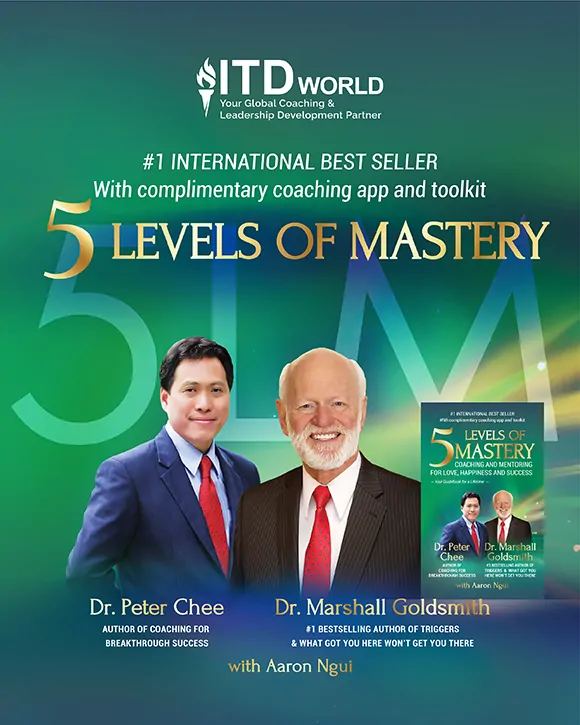
5 Levels of Mastery for Love, Happiness, and Success

Get a head start by unleashing your potential to live an abundant life with the 5 Levels of Mastery!

This book by Dr Peter Chee, Dr Marshall Goldsmith, and Aaron Ngui, is written to serve as your compass, companion, and coach in your life’s voyage for obtaining love, happiness, and success in abundance.
This book synergizes the expertise and learning from people like Peter Drucker, Zig Ziglar, Tony Buzan, Stephen Covey, Warren Bennis, Paul Hersey, and Jim Rohn among many others, and is based on extensive research and practice in coaching, mentoring, training, and developing leaders in over 80 countries for more than 30 years.

Drawing from the wisdom of these time-tested lessons, the authors have developed powerful approaches, models, and best practices that supports leaders worldwide achieve transformational growth.

Those who embrace the 5 Levels of Mastery develop empowering habits, find joyful purpose, and live fulfilling lives that inspire others.

Get ready to take the first step on your part to Mastery @ Amazon!

FURTHER RESOURCES