
For many managers and employees, the annual performance review is a source of anxiety. In fact, it is often viewed as a tedious administrative hurdle rather than an opportunity for growth. However, when approached with the right mindset and tools, employee evaluations can be a powerful catalyst for organizational success.
As a business training and coaching provider, we have seen firsthand how shifting from “criticism” to “coaching” transforms company culture. The secret to this shift? A standardized, well-structured employee performance checklist.
Whether you are conducting a routine quarterly check-in or a comprehensive year-end talent assessment, having a clear framework ensures fairness, drives engagement, and aligns your workforce with the business goals. Let’s explore how to build and execute a flawless performance evaluation process!
 |
Author: Jonathan M. Pham |
Highlights
- A structured evaluation process eliminates “recency bias” and provides consistency by measuring every employee against the same objective criteria, which also offers legal protection for the business.
- Effective checklists evaluate both hard results (KPIs and goal achievement) and soft skills (communication, teamwork, and initiative) to create a holistic view of an employee’s contribution.
- While standard reviews assess past performance, “talent assessments” focus on the future—identifying high-potential employees (HiPos), planning for succession, and creating professional development plans.
- Success depends on preparation and follow-up; managers should treat reviews as collaborative coaching sessions and transition from annual meetings to regular, informal check-ins throughout the year.
Why Your Business Needs a Structured Employee Evaluation Process
A lack of structure in performance appraisals often leads to recency bias—where a manager only remembers what the employee did in the last three weeks—and vague, unhelpful feedback. A structured performance appraisal process is key to eliminating these pitfalls. Implementing a standardized checklist ensures:
-
Consistency and Fairness: Every individual is measured against the same baseline criteria.
-
Clear Expectations: Team members understand exactly what is required to succeed and advance.
-
Strategic Alignment: Individual goals are firmly tethered to the company’s broader mission.
-
Legal Protection: Documented performance history protects the business in the event of necessary terminations.
Core Elements of an Employee Performance Review Checklist
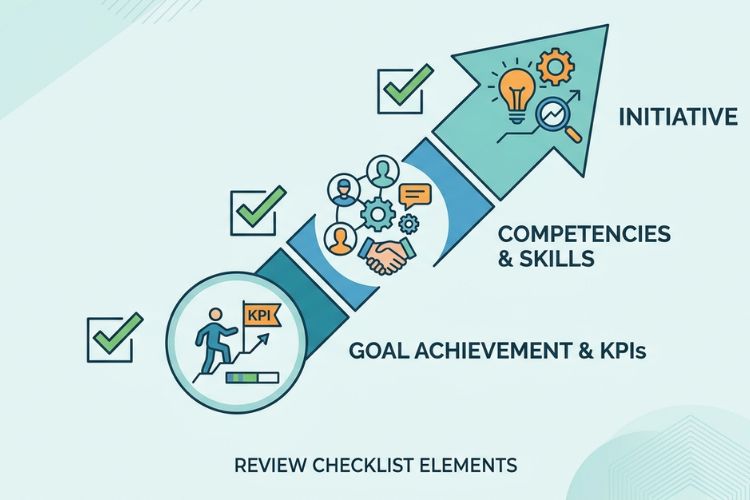
A comprehensive employee performance review should cover both the “what” (results) and the “how” (behaviors). Ensure your evaluation covers the following core areas:
- Goal Achievement & KPIs
Evaluate the person’s success in meeting their Key Performance Indicators (KPIs) over the review period. Did they hit their sales targets? Did they complete their projects on time and within budget?
- Core Competencies & Soft Skills
Technical skills are only half the equation. Assess the individual’s communication, teamwork, and adaptability. How well do they collaborate across departments? Do they elevate the morale of their peers?
- Problem-Solving & Initiative
Does the employee wait to be told what to do, or do they proactively identify and solve problems? Highlighting initiative encourages a culture of ownership and accountability.
Read more: Brilliant Jerks – How to Handle Toxic “High Performers” in the Workplace
The Year-End Talent Assessment Checklist: Preparing for the Future
While standard reviews look backward at past performance, a year-end talent assessment looks forward. This is where managers put on their leadership coaching hats and evaluate long-term potential.
When conducting a year-end talent assessment, focus on the following strategic elements:
-
Identifying High-Potential Employees (HiPos): Who has the capacity, aspiration, and engagement to step into leadership roles?
-
Succession Planning & Role Alignment: Are the right people in the right seats? As your business scales in the coming year, what new roles will be required, and who internally is primed to fill them?
-
Professional Development Planning: Collaborate with the employee to create a Professional Development Plan (PDP). Identify specific training programs, mentorship opportunities, or executive coaching sessions they need to reach the next level.
Step-by-Step: How to Evaluate Employee Performance Effectively
Having a great checklist is only step one. How you deliver the evaluation determines its impact. Here are a few best practices for leaders when it comes to performance management:
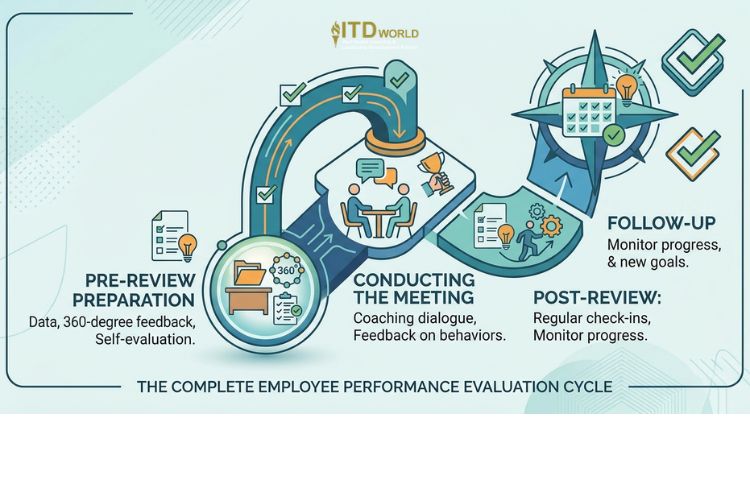
- Pre-Review Preparation
Never walk into a performance review unprepared. Gather quantitative data, review notes from previous 1-on-1s, and collect 360-degree feedback from peers. Ask the employee to complete a self-evaluation to uncover any discrepancies between how they view their performance and how you view it.
- Conducting the Meeting
Frame the conversation as a collaborative coaching session, not a trial. Start by highlighting achievements. When discussing areas for improvement, make sure to give constructive feedback focused on behaviors, not personality traits. Ask open-ended questions like, “What roadblocks are preventing you from reaching your goals, and how can I support you?”
- Post-Review Follow-Up
The biggest mistake managers make is filing the review away and not discussing performance again for another year. Transition to continuous performance management by scheduling regular, informal check-ins to monitor progress on the goals set during the formal review.
Frequently Asked Questions (FAQ) on Employee Performance Checklists
What should be included on an employee performance checklist?
A strong checklist should include an evaluation of KPIs and goal completion, core competencies (like communication and teamwork), attendance and reliability, proactive problem-solving, and a dedicated section for future goal-setting and professional development.
How do you prepare for a year-end talent assessment?
Preparing for an annual performance review involves gathering comprehensive data. Managers should review the employee’s past goals, collect feedback from coworkers or clients (360-degree review), and ask the employee to complete a self-evaluation. Doing so ensures the highest chance for a holistic, unbiased assessment.
How often should performance evaluations happen?
While the formal year-end talent assessment happens annually, best practices dictate adopting continuous performance management. Managers should hold weekly or bi-weekly 1-on-1s and conduct formal mini-reviews quarterly to ensure team members stay on track and feel supported year-round.
What is the difference between a performance review and a talent assessment?
A performance review typically focuses on evaluating an employee’s past work and current competency in their specific role. A talent assessment, on the other hand, is forward-looking; it evaluates an individual’s future potential, leadership capabilities, and readiness for promotion as part of a company’s succession planning.
Elevating Performance Through Leadership Coaching
An employee performance checklist is a vital tool, but a tool is only as effective as the person wielding it. If your managers lack the communication skills to deliver tough feedback, or the emotional intelligence to inspire their teams, even the best checklist will fall flat.
At ITD World, we specialize in equipping managers with the competencies required to transform from taskmasters into true coaches. Through our tailored business training and coaching programs, we enable organizations to build high-performance cultures where talent thrives.
Contact us today to learn how we can help your leadership team master the art of talent assessment and performance management!
Other resources you might be interested in:
- Employee Skill Development: Strategies for Organizations to Boost the Bottom Line
- Training Needs Analysis (TNA): From Insight to Impact
- Performance Coaching Explained: Unlock People’s Greatness
- Employee Wellbeing in the Workplace: Practical Strategies for Long-term Success