If you have spent any time in a corporate boardroom recently, chances are you have heard the familiar rallying cries:
- “We need to be more agile.”
- “We must embrace continuous disruption.”
- “If we aren’t disrupting ourselves, our competitors will.”
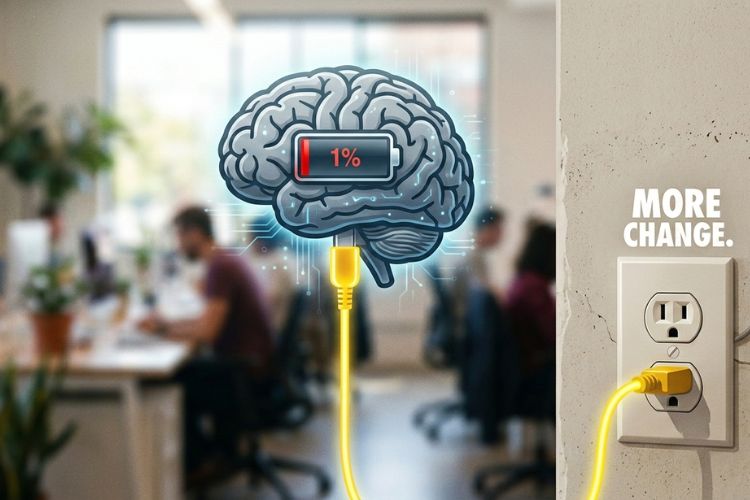
In the modern business landscape, change has become a permanent state of being. We demand that our organizations operate in a constant state of flux to survive.
However, there is a fundamental conflict at play: while companies thrive on agility, human biology is hardwired to crave predictability, routine, and stability.
When leaders treat change as an endless marathon rather than a series of sprints, they inadvertently foster exhaustion and cynicism. To lead effectively today, it is essential that executives understand the mechanics of change fatigue in the workplace and learn how to manage it.
 |
Author: Jonathan M. Pham |
Highlights
- Change fatigue is a state of passive exhaustion caused by a continuous overload of organizational shifts without recovery time. Unlike change resistance (which is active and energetic) or burnout (which is general workplace stress), fatigue is a specific, “quiet” withdrawal characterized by apathy and a “this too shall pass” attitude.
- While employees can tap into a “surge capacity” for short-term pivots, this mental energy is designed for sprints, not marathons. With the average employee now facing five times more planned changes than they did ten years ago, this adaptive energy has run dry, leading to a collapse in willingness to support new initiatives.
- Beyond the sheer volume of digital transformations and mergers, fatigue is typically triggered by systemic leadership failures. These include “initiative overload” (making everything a priority), poor communication regarding the “why” behind changes, and “defensive organizing,” where leaders launch new projects to soothe their own performance anxieties.
- Organizations suffering from change fatigue see a sharp rise in cynicism, quiet quitting, and absenteeism. Behavioral red flags include once-vocal employees becoming silent in meetings or nodding along to new workflows without ever actually implementing them.
- To overcome fatigue, leaders must prioritize human-centric management. This involves “pacing and sequencing” initiatives to create quiet periods, fostering psychological safety so employees can express when they are at capacity, and utilizing HR to create “change heatmaps” that identify and protect departments currently overwhelmed by too many overlapping transitions.
What is Change Fatigue in the Workplace?
Change fatigue is a state of physical, emotional, and cognitive exhaustion resulting from continuous, overlapping, or poorly managed organizational shifts. It occurs when individuals or teams are repeatedly subjected to transitions—whether structural, technological, or cultural—without sufficient time, resources, or guidance to adapt and recover.
To better understand the phenomenon, it is helpful to look at it through the lens of the Energy-Commitment Model (ECM). The ECM posits that an employee’s readiness for change relies on two levers: their Energy (cognitive bandwidth, time, and emotional reserves) and their Commitment (their internal drive or emotional alignment with the change).
In a healthy environment, the “engagement threshold”—the amount of energy required to adopt a new initiative—is relatively low. But in a fatigued one, that threshold skyrockets. Exhausted team members simply do not have the cognitive bandwidth to care, no matter how objectively beneficial the new initiative may be.
Change fatigue vs. change resistance
Many leaders conflate fatigue with resistance, but diagnosing the problem incorrectly will lead to the wrong treatment.
- Change resistance is usually active. It looks like pushback, arguing in meetings, forming coalitions against a new initiative, or active non-compliance. Resistance is fueled by fear, but it still requires energy.
- Change fatigue, by contrast, is passive. It looks like apathy, withdrawal, and a “quiet quitting” mindset. Fatigued individuals do not have the energy to fight you; they simply comply in form but not in spirit, exhibiting a “this too shall pass” attitude toward your new strategic vision.
Coaching Insight: If your team is arguing with you about a new workflow, they are resistant (but engaged). But if they stare at you blankly, nod, and then fail to implement the new workflow, they are fatigued.
Change fatigue vs. burnout
Per the World Health Organization, employee burnout is a syndrome conceptualized as resulting from chronic workplace stress that has not been successfully managed. As such, it involves a broader issue related to workload, toxic culture, or lack of autonomy. Change fatigue, on the other hand, is a specific, targeted response to the pace and volume of change initiatives.
That being said, unchecked change fatigue is one of the fastest escalators to full-blown burnout.
| Feature | Change Resistance | Change Fatigue | Burnout |
| Energy Level | High/Active: Requires effort to push back. | Low/Passive: Withdrawal and apathy. |
Depleted: Exhaustion and cynicism.
|
| Primary Behavior | Arguing, questioning, and active non-compliance. | Blank stares, nodding without action, “quiet quitting.” |
Emotional distancing, reduced efficacy, chronic stress.
|
| Root Cause | Fear of the specific change or loss of control. | Volume: Too many changes happening too fast. |
Environment: Chronic stress, toxic culture, or workload.
|
| The “Vibe” | “I won’t do this because it’s wrong/scary.” | “I can’t do this; I’m just waiting for it to blow over.” |
“I am done. I have nothing left to give to this job.”
|
Why Care about Change Fatigue in the Workplace?
Science writer Tara Haelle once popularized the concept of “surge capacity“—a collection of mental and physical adaptive systems that humans draw upon for short-term survival in acutely stressful situations. When an organization announces a massive pivot, employees naturally tap into this surge capacity. They put their heads down, work late, learn the new software, and push through the transition. But the thing is, surge capacity is designed for short sprints, not endless marathons. When one transition bleeds into the next without a recovery period, that adaptive energy runs dry.
According to Gartner, the average employee experienced 10 planned enterprise changes in 2022, up dramatically from just two in 2016. Unsurprisingly, this rapid acceleration has taken a massive toll.
- A Capterra survey found that a staggering 71% of employees report feeling overwhelmed by the amount of change at their job.
- In addition, Gartner research reveals that employees’ willingness to support enterprise change collapsed from 74% in 2016 to just 43% in 2022.
When leaders ignore the psychological impact of continuous change at work, they inadvertently create an exhausted, cynical, and paralyzed workforce.
Read more: Always-on Culture – How the Availability Trap Erases Profits

What Causes Change Fatigue in the Workplace?
Normally, it is the result of a thousand paper cuts—the cumulative, draining effect of multiple initiatives piling up, leading to a state of change saturation.
The compounding effect of modern business disruptions
- During digital transformation
Companies are rushing to integrate AI, adopt new CRM systems, and migrate to cloud-based platforms. New technology implementation requires immense cognitive effort from those who are already trying to do their daily jobs. When a new tool is introduced every quarter, learning curves overlap, and people quickly become overwhelmed.
- After a company merger
Mergers and acquisitions (M&A) are notoriously stressful. Employees are forced to navigate culture clashes, restructuring / reorganization, role ambiguity, and system integrations. The prolonged uncertainty of an M&A process rapidly depletes emotional reserves.
- Leadership turnover
A revolving door in the C-suite or mid-management means a constant shifting of the guard. Every new leader brings their own “vision,” leading to shifting priorities that leave frontline workers feeling whiplashed.
Systemic & leadership failures
Beyond the actual events, the way change is managed is often the true culprit:
- Initiative overload
This happens when an organization runs too many transformation programs concurrently. When everything is a “Tier 1 Priority,” nothing is. Team members are forced to split their attention across a dozen “urgent” rollouts.
- Poor communication
Change without clarity breeds anxiety. When leadership fails to explain the why behind a transition, or when messaging is inconsistent, it’s just natural that people fill the silence with worst-case scenarios.
- Defensive organizing
Research from INSEAD highlights a psychological driver of change fatigue known as “defensive organizing.” Many times, large-scale initiatives are not born of strategic necessity, but from a leader’s own worry about performance challenges. Instead of addressing the root problem, they grasp at “life raft” ideas (like adopting a trendy new methodology).
This uncritical embrace of action over substance diffuses the leader’s anxiety but forces the organization onto a hamster wheel of pointless effort.
Signs & Symptoms of Change Fatigue in the Workplace
Behavioral & emotional red flags
- Apathy and cynicism: The most glaring sign of fatigue. Once-enthusiastic individuals stop asking questions during town halls, skip optional meetings, and greet new announcements with eye rolls or sarcasm.
- Disengagement / Quiet quitting: Employees retreat into self-preservation mode. They do the absolute bare minimum required to keep their jobs, and all discretionary effort vanishes.
- Psychological stress: You may notice shorter tempers, incivility among peers, or visible signs of exhaustion (slumped posture, physical tiredness).
Performance & organizational indicators
- Loss of productivity: When cognitive overload hits, quality suffers. You will see missed deadlines, an increase in errors, and a general sluggishness in operations.
- Absenteeism: Fatigued employees tend to take more sick days or mental health days simply to escape the environment.
- Low morale and High turnover / Employee attrition: Eventually, people seek stability elsewhere. Change fatigue is a massive flight risk indicator.

How to Overcome Change Fatigue in the Workplace
If your organization is exhibiting the warning signs above, pushing harder will only break the system. You must pivot your approach from top-down enforcement to human-centric support.
-
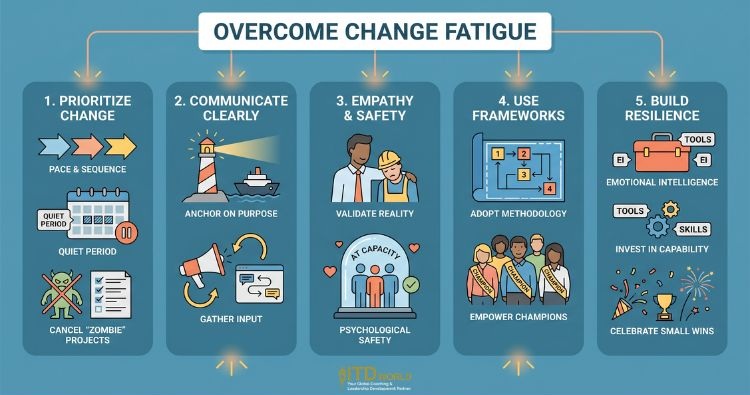
Practice prioritization
The first step to treating fatigue is to stop the bleeding. Specifically, leaders must look at the organization’s entire portfolio of change and practice prioritization.
- Pacing and sequencing: Do all of your desired organizational changes need to happen immediately? Audit the cadence of change across departments. Sequence initiatives logically so that one change stabilizes before the next one begins.
- Create “quiet periods”: Incorporate intentional breathers into your corporate calendar. Just as an athlete needs rest days to build muscle, an organization needs stabilization phases to integrate new habits. Pause non-essential rollouts during high-stress seasons (e.g., Q4 for retail, or tax season for accounting).
- Kill the “zombie” projects: Cancel initiatives that are draining energy but delivering no tangible value. Showing employees that you are willing to remove burdens builds massive goodwill.
Read more: Mindfulness and Business – The ROI of Presence
-
Communicate transparently
In a vacuum of information, people assume the worst. As such, transparent communication is the ultimate anxiety-reducer.
- Anchor on purpose: Instead of fixating on WHAT is changing (the operational mechanics), focus on WHY it is changing (the strategic necessity). Give team members a clear line of sight into how this transition benefits them or the customer.
- Establish robust feedback loops: Communication cannot be a monologue from the C-suite. Depending on the size of your organization, consider pulse surveys, focus groups, or anonymous Q&A platforms. When soliciting employee feedback, you must close the loop—show them exactly how their input altered the implementation plan.
-
Lead with empathy & safety
Change is deeply emotional. It poses a serious threat to an employee’s sense of competence, identity, and control.
- Empathy in leadership: Acknowledge the difficulty of the transition. It is incredibly powerful for a leader to stand up and say, “I know the last six months of this software migration have been frustrating and exhausting. I see how hard you are working.” Validating their reality reduces cognitive dissonance.
- Cultivate psychological safety: People need to feel safe to express their fatigue without being labeled as “negative” or a “blocker.” As leaders, your job is to promote an environment where everyone can say, “I am at capacity and cannot take on learning this new protocol this week,” and be met with support rather than punishment.
Read more: Leading by Example – Key to Truly Inspiring Action & Trust
-
Utilize change management frameworks
Relying on ad-hoc transitions is a recipe for chaos. Organizations need a structured architecture for change.
- Adopt a proven methodology: Whether it is Prosci’s ADKAR model (Awareness, Desire, Knowledge, Ability, Reinforcement) or Kotter’s 8-Step Process, using a standard framework provides a predictable map for people to follow.
- Empower Change champions / Change sponsors: Fatigue typically stems from a feeling of helplessness; that’s why decentralizing the process is key to solving the problem. One way to do it is to appoint and train local change champions—respected peers within a department who are able to co-create solutions, test pilot programs, and provide hands-on, localized support to their colleagues.
-
Focus on resilience building & capability
Rather than just asking employees to be more adaptable, it is critical that organizations give them the tools to do so.
- Invest in capability: Merely telling people to “toughen up” does not help with cultivating resilience at all. What’s important is that they are provided with tangible stress-management workshops, emotional intelligence training, and agile project management skills.
- Celebrate small wins: Exhaustion makes the finish line look impossible; that’s why it’s essential to break large transformations into micro-milestones. Celebrate incremental progress publicly to inject dopamine and momentum back into the team.
Read more: Business Process Transformation – Strategies for Success
Strategies to reduce change fatigue in the workplace
Role of HR in Combating Change Fatigue in the Workplace
While executives define the strategic changes, Human Resources must act as the ultimate steward of organizational capacity.
- Creating change heatmaps
HR leaders should actively monitor the volume of change across the enterprise. By visualizing organizational structures and project rollouts, HR may better identify “hot spots”—departments that are currently taking the brunt of multiple changes. For example, if the Sales team is simultaneously dealing with a new compensation structure, a new CRM, and a territory realignment, HR must step in to advise leadership to delay one of those initiatives.
- Coaching middle managers
According to Gartner, unaddressed employee change fatigue erodes business performance, yet 90% of HR leaders do not feel their managers are equipped to help employees struggling with it. Middle managers are the shock absorbers of the organization. Hence, HR must provide targeted training for line managers on how to lead with empathy, how to run 1-on-1s that gauge emotional bandwidth, and how to spot the early warning signs of burnout.
- Enhancing employee benefits & support
During periods of high continuous disruption, the physiological toll on employees is immense. Therefore, HR must align benefits to support recovery. This includes Employee Assistance Programs (EAPs) with access to mental health professionals, subsidized wellness apps, strict enforcement of “no-meeting” days, and flexible working policies that allow employees to manage their life stressors alongside work demands.
Read more: Unnecessary Meetings – Ending the Invisible Tax on Your Team’s Performance
FAQs
How do you know if your organization has reached “change saturation”?
Change saturation occurs when the sheer volume and frequency of disruptive changes exceed the capacity of your workforce to adopt them. You will know you have reached it:
- When previously cooperative teams become combative over minor adjustments
- When project outcomes consistently fail to meet targets, and
- When there is widespread confusion about the company’s core priorities.
How to measure change fatigue in an organization?
- Conduct an assessment: Use dedicated diagnostic tools or surveys to measure employee capacity. Ask direct questions like: “I feel overwhelmed by the amount of change happening in this company” or “I understand how the current initiatives connect to our overall strategy.”
- Evaluate change readiness: Before launching a new initiative, map out all ongoing projects impacting the target department. If the department is already undergoing a software migration and a team restructure, their change readiness is effectively zero.
- Leverage 1-on-1s: Equip managers with the tools to ask capacity-based questions during weekly check-ins. A simple “How much of your mental bandwidth is currently being consumed by adjusting to new processes?” can yield profound insights.
Read more: 360-Degree Feedback – From Theory to Action
How can leaders prevent change fatigue before it starts?
Leaders can do it by:
- Auditing the change portfolio and pacing initiatives to avoid overlap.
- Prioritizing only the most strategic changes.
- Over-communicating the “why” behind the change.
- Empowering team members to co-create solutions and involving them early in the process.
How do you motivate employees who are exhausted by constant restructuring?
You cannot mandate motivation; you must rebuild it.
- Start by acknowledging their exhaustion and validating their hard work.
- Focus on quick, achievable wins to build momentum.
- Give them agency and control over how the restructuring impacts their specific daily tasks, and
- Ensure you are providing adequate time for rest and stabilization.
What should managers do when multiple changes overlap?
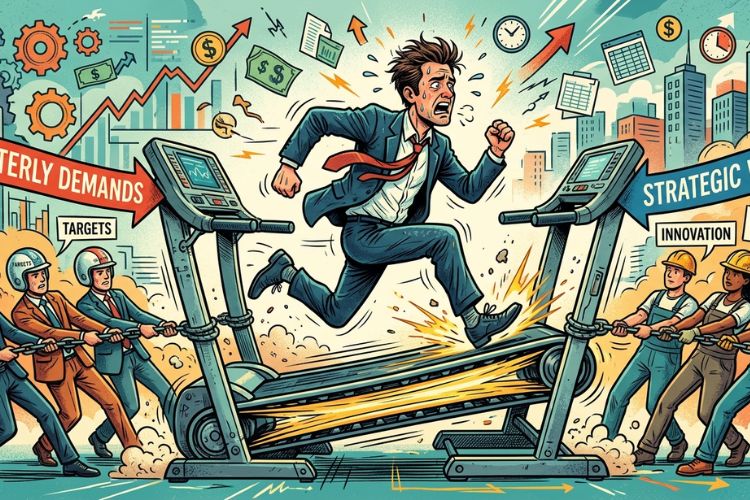
Managers must act as gatekeepers to protect their team’s cognitive bandwidth. They should prioritize the changes, identifying what must be adopted immediately versus what can be delayed.
If organizational demands are too high, they need to advocate upward, using data to show executives that overlapping rollouts are risking the success of all initiatives.
Final Thoughts
The business landscape is not going to slow down. Digital transformation will accelerate, markets will shift, and companies will continue to restructure to stay competitive. However, the human brain’s capacity to absorb that disruption has a finite limit.
Change fatigue is not a sign of a weak workforce; it is a sign of a poorly designed organizational ecosystem. It represents a systemic failure to balance agility vs. instability. By pacing initiatives, prioritizing transparency, fostering psychological safety, and viewing employees as co-creators rather than mere subjects of change, organizations can rebuild their teams’ momentum.
ITD World provides specialized coaching and training solutions designed to help leaders & organizations secure a competitive advantage – and be equipped to win in today’s dynamic landscape. Contact us today to learn more about our world-class programs!
Other resources you might be interested in:
- Soft Skills in the Age of AI: How to Grow in the 21st Century
- 6 Benefits of DEI in the Workplace
- Thoughtful Leadership: Why It Matters in Today’s Hectic World
- Employee Engagement in the Digital Age: Strategies for Powering Up Your Workforce