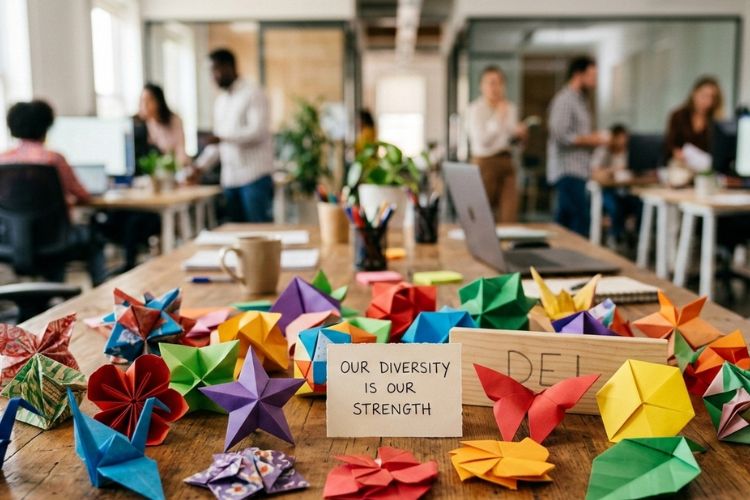
In the contemporary global economy, Diversity, Equity, and Inclusion (DEI) has transcended its origins as a mere compliance checklist or human resources initiative. It has evolved into a cornerstone of organizational resilience – and a critical driver of competitive advantage. While often grouped together as a single acronym, these three pillars represent distinct, yet interdependent, functions of a high-performing corporate culture.
To understand their interaction, let us consider the following definitions:
- Diversity (Representation) is the composition of the workforce, reflecting the broad spectrum of human experience—from race, gender, and neurodiversity to professional background and socioeconomic status.
- Equity (Fairness) is the structural commitment to justice. It acknowledges that employees begin from different starting lines and provides the specific resources and access necessary for everyone to reach the same finish line.
- Inclusion (Belonging) is the cultural “glue” that ensures every individual feels valued, allowing them to contribute their best work toward shared organizational goals.
Diversity is a fact. Equity is a choice. Inclusion is an action. Belonging is an outcome.
Arthur Chan
When these elements align, they do more than improve morale; they fundamentally alter the trajectory of a business.
 |
Author: Jonathan M. Pham |
Highlights – Benefits of DEI
- Diverse organizations consistently outperform peers in profitability and innovation revenue by leveraging “cognitive friction” to challenge groupthink and identify risks early.
- Inclusive teams make rigorous business decisions twice as fast as homogenous groups because they anticipate pitfalls and avoid the echo-chamber effect.
- In today’s competitive labor market, a commitment to Equity and Inclusion significantly lowers turnover costs and is a non-negotiable requirement for top-tier Millennial and Gen Z candidates.
- A workforce that reflects the global population possesses the cultural intelligence necessary to avoid marketing blunders, build trust with clients, and capture new customer segments.
Top 6 Benefits of DEI in the Workplace (with Statistics & Examples)
-
Enhanced financial performance & risk mitigation
The most compelling argument for executives is the “bottom line.” However, the mechanism here is not just about having different demographics in the room, but risk mitigation.
Homogenous groups tend to share similar blind spots. As such, when leadership teams reflect the multifaceted world we live in, they bring a wider array of perspectives that help identify financial risks and market opportunities that uniform groups might miss.
The Data: According to McKinsey’s analysis, companies in the top quartile for ethnic representation are 39% more likely to outperform their peers financially. Similarly, those leading in gender balance are 27% more likely to see superior financial returns.
Read more: Women in Leadership – Breaking Down Barriers for a More Equitable Future
-
Cognitive friction drives innovation
We need diversity of thought in the world to face the new challenges.
Tim Berners-Lee
Homogeneity breeds “groupthink,” where teams settle on the first acceptable idea rather than the best one to avoid social friction. Conversely, teams with varied backgrounds are known for their “cognitive diversity.” They approach problems from different angles—e.g. a computer scientist from a rural background may solve a coding problem differently than one from an urban tech hub.
This dynamic creates “constructive friction.” While it may feel less comfortable initially, it forces the team to pressure-test ideas, resulting in products that are more robust and innovative.
The Data: A global study by the Boston Consulting Group (BCG) found that companies with heterogeneous management teams report 19% higher innovation revenue. These organizations are better at adapting to changes and creating products that resonate with a broader customer base.
-
Rigorous decision-making (the “Devil’s advocate” effect)
If you and I always agree, then one of us is redundant.
Larry Wall
It is a common misconception that inclusive teams are slower because of conflicting viewpoints. In reality, while the initial debate may be more robust, the resulting decisions are typically more thoroughly vetted.
Uniform teams often rush to consensus, only to face execution hurdles later because they failed to anticipate pitfalls. A multifaceted team acts as a built-in “stress test” for every strategic decision.
The Data: Research by Cloverpop reveals that inclusive teams make better business decisions 87% of the time. Moreover, they reach these conclusions twice as fast with half the meetings compared to non-inclusive ones, as the rigorous initial debate prevents the need for endless “re-do” meetings later.
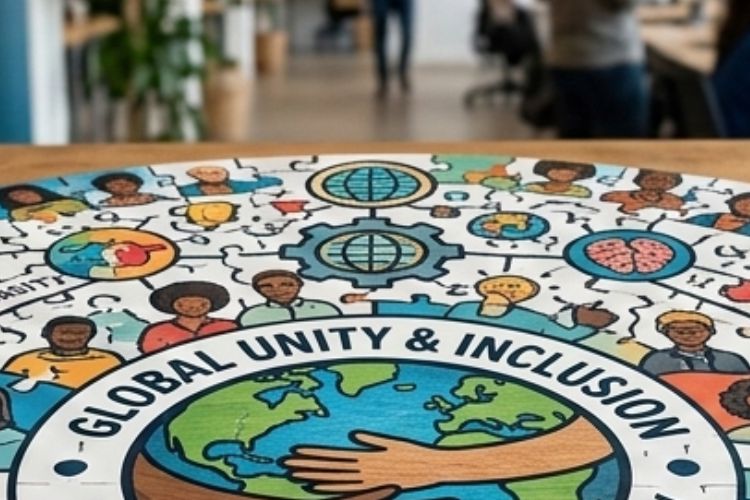
Why is DEI important
-
Winning the war for talent
You can’t be what you can’t see.
Marian Wright Edelman
The competition for skilled labor is fiercer than ever. Today’s workforce—especially Millennials and Gen Z—views an inclusive culture not as a perk but as a requirement. They look for evidence that they will be supported – and that there is a path for them to ascend. If they look at a leadership page and see no one who looks like them or shares their background, they are likely to assume a “glass ceiling” exists.
The Data: Glassdoor reports that 76% of job seekers consider a multifaceted workforce an important factor when evaluating job offers. Furthermore, Deloitte has found that inclusive cultures have 22% lower turnover rates, saving companies significant resources in recruitment and training.
-
Market reach & cultural intelligence
A diverse mix of voices leads to better discussions, decisions, and outcomes for everyone.
Sundar Pichai
To sell to the world, you must reflect it. “Cultural Intelligence” (CQ) is the capability to relate and work effectively across cultures. A workforce rich in varied backgrounds prevents costly marketing blunders—such as slogans that translate offensively in other languages or products that fail to account for local customs.
The Data: According to the Harvard Business Review, companies with high levels of inherent and acquired diversity are 70% more likely to capture new markets. Employees who share a cultural background with their clients are significantly better equipped to cultivate trust and uncover unmet needs.
-
Brand reputation & ESG resilience
In an era of conscious consumerism, a brand’s reputation is inextricably linked to its values. In fact, investors are increasingly using Environmental, Social, and Governance (ESG) criteria to screen investments. A strong DEI strategy signals to the market that the company is forward-thinking and socially responsible – which builds “brand equity,” providing a buffer of goodwill during public relations crises.
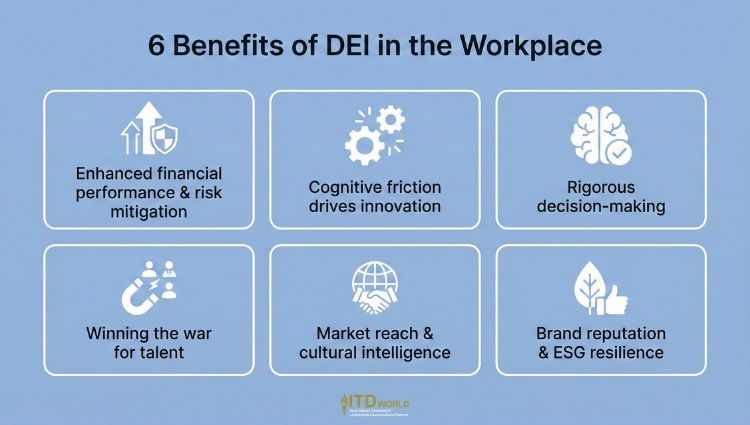
Benefits of DEI in the workplace
Making the Case for the Benefits of DEI to the Management
Often, middle managers or HR professionals struggle to convince senior leadership to invest resources in DEI. To move beyond platitudes, one must present it as a mechanism for operational excellence.
Here is how to frame the benefits of DEI:
- Quantify the cost of uniformity
Instead of just presenting why inclusion matters, try to demonstrate the cost of exclusion.
-
- Turnover Math: Calculate the cost of losing talent. If exit interviews show that underrepresented groups are leaving due to a lack of belonging, multiply the number of exits by 1.5x their annual salary (the standard cost of replacement). This is “leaking revenue.”
- The Innovation Gap: Compare the speed of product launches against competitors known for their inclusive cultures.
- Link to strategic goals
The idea is to tie DEI directly to the company’s annual objectives (OKRs). For example:
Goal: Expand into the Asian market.
=> DEI Argument: “We currently lack internal cultural competence regarding this region. Hiring and promoting talent with this specific background is a strategic necessity for market entry, not just a ‘nice-to-have’.”
Goal: Improve customer satisfaction.
=> DEI Argument: “Our customer base is 40% female, yet our product team is 90% male. Adjusting this ratio will likely improve our Net Promoter Score (NPS) by ensuring the product actually fits the user.”
Inclusion is not a matter of political correctness. It is the key to growth.
Jesse Jackson
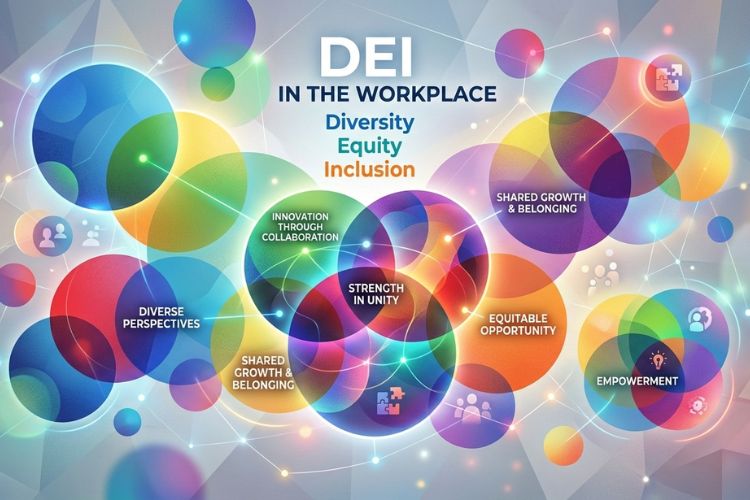
DEI initiatives in the workplace
FAQs about the Benefits of DEI
Who benefits from DEI the most?
The short answer: Everyone benefits.
- Employers gain higher profitability, agility, and lower turnover costs.
- Employees experience higher psychological safety. When people don’t have to “mask” who they are, they have more mental energy to dedicate to their work.
- Customers receive better products and services that cater to their specific, nuanced needs.
- Society benefits from reduced systemic inequality and greater economic mobility.
Strength lies in differences, not in similarities.
Stephen R. Covey
Why is there a backlash against DEI? What are the downsides?
Generally, resistance stems from the following three sources:
- The Zero-Sum Fallacy: A misunderstanding that one group’s gain is another’s loss.
- Performative Actions: When companies talk about values but don’t change policies, employees would, naturally, develop cynicism or “initiative fatigue.”
- Fear of Irrelevance: Some individuals fear losing their autonomy or status in a changing demographic landscape.
How to address it: Shift the narrative from “policing behavior” to “empowering performance.” Emphasize that an inclusive culture (e.g., flexible work policies, transparent promotion criteria) benefits everyone, not just marginalized groups.
Diversity is being invited to the party; inclusion is being asked to dance.
Verna Myers
How do we implement DEI in the workplace effectively?
Implementation must be done strategically, not sporadically.
- Audit & Measure: Start with data. Who are you hiring? Who is being promoted? Where are the gaps?
- Embed in Processes: Remove bias from job descriptions, anonymize resumes where possible, and standardize interview questions to ensure meritocratic selection.
- Executive Buy-In: DEI must be led from the top. Leaders must model inclusive behaviors.
- Skill-Based Training: Move beyond general “unconscious bias” awareness to specific skills, such as “How to run an inclusive meeting” or “How to give equitable feedback.”
- Accountability: Tie specific inclusion goals to business outcomes and leadership performance reviews.
Read more: 45 Quotes About Diversity, Equity & Inclusion (DEI)
ITD World provides specialized coaching and training solutions designed to help leaders & organizations secure a competitive advantage – and be equipped to win in today’s dynamic landscape. Contact us today to learn more about our world-class programs!
DEI training for employees
Other resources you might be interested in:
- Organization Development (OD): A Closer Look
- Intent vs Impact in the Workplace: How to Close the Gap
- Building KPIs & Metrics that Truly Matter & Drive High Performance
- Ownership at Work: How to Make It More Than a Buzzword