
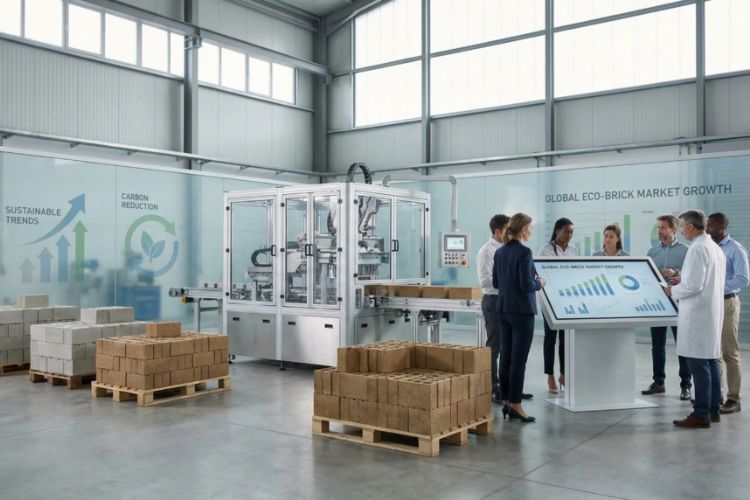
Walk into any brick field in Bangladesh today and you will notice something has shifted. Owners who spent decades doing things the old way are now huddled around laptops looking at brick making machine sale specs. Younger family members who took over the business are pushing for automation. And government officials are showing up more often than they used to.
The pressure to change is real. But so is the confusion around what it actually costs, and whether all this investment is going to pay off. This guide breaks it down for local manufacturers who want straight answers, not just sales talk.
Bangladesh Brick Making Machine Market Overview
Bangladesh makes around 23 billion bricks a year. Over 7,000 kilns are running across the country, and the sector chips in about 1% of national GDP. Those numbers sound impressive, but they come with a lot of baggage.
Years of clay kiln operation have done a number on the air quality in many regions. Farmland has been destroyed. People living near brick fields have complained about health issues for years. The government eventually had to respond, and they did with a directive that tells the industry to clean up or get shut down. Traditional clay kilns are supposed to be phased out by 2025, with factories switching to eco-friendly auto bricks and concrete blocks instead.
Not every kiln owner has made that switch yet. Enforcement has not been completely consistent. But the window for waiting it out is getting smaller every year.
On the global side, the brick making machine market sat at around $2.34 billion in 2026 and is expected to hit $2.85 billion by 2030. That works out to about 5.1% annual growth, mostly driven by urbanization and stricter building codes. Asia-Pacific is leading that growth, and Bangladesh sits right in the middle of it.
Types Available
There is no one machine that fits every situation, and buying the wrong type for your setup is an expensive mistake. Here is a plain rundown of what is actually out there.
-
Autoclaved Aerated Concrete (AAC) Machines work by mixing sand or fly ash with lime, cement, and an aerating agent. The result is a lightweight block that holds heat well and checks the eco-friendly box. Builders like them. Demand has been climbing steadily.
-
Compressed Earth Block (CEB) Machines are interesting because they mostly use local soil. You add a small amount of cement or lime and press it into blocks. These work really well for rural construction projects where you cannot easily get conventional building materials delivered.
-
Concrete Block and Paver Makers are the go-to for large urban projects. High output, good precision, easy to automate. If you are supplying for housing developments or road infrastructure, this is probably the category to be looking at.
-
Hybrid and Energy-Efficient Models sit in between. They can handle both clay bricks and auto bricks, and they are built with lower energy consumption in mind. For a manufacturer who is not ready to completely walk away from clay but needs to reduce emissions, these are worth considering.
Benefits and Considerations
Let’s be honest here. The benefits are real, but so are the headaches. Anyone who has dealt with a big equipment purchase knows the sales pitch is always smoother than the reality.
Key Benefits
-
Mass Production is the obvious one. A modern machine running at capacity can produce thousands of bricks or blocks every single hour. For any manufacturer trying to supply large construction projects, manual production just cannot compete.
-
Consistent Quality is actually underrated. When you are doing everything by hand, quality varies. One batch comes out well, the next one does not. Automated machines take that variability out of the equation. The size, shape, and strength stay consistent, which means less material waste and fewer complaints from buyers.
-
Eco-friendly Output has gone from being a nice-to-have to a practical necessity. If your machine can run on fly ash or recycled aggregates instead of mined clay, you are better placed to meet government mandates and sell to clients who care about green building standards.
-
Cost Savings do not show up right away. The first year or two you are paying off the investment. But once that is done, automation tends to keep operating costs stable even when wages go up or materials get more expensive.
Major Considerations
-
Investment Amount is where a lot of manufacturers stop and think hard. Setting up a properly equipped facility runs between Tk 300 and 500 million. That is serious money, and not every factory owner can just write that check.
-
Mechanization Barriers hit smaller operations hardest. Going from a manual kiln with workers who have been doing the same job for fifteen years to a computerized automated line is not just about buying equipment. It requires retraining people, changing workflows, and accepting that things will go wrong during the transition.
-
Market Shifts keep moving. Farmland is shrinking. Environmental concerns are not going away. The buyers who used to purchase clay bricks are starting to ask for concrete blocks and eco-friendly alternatives. Manufacturers who do not keep up with this drift are going to find their customer base slowly disappearing.
What Should I Look for in a Brick Making Machine?
When you are actually sitting down to compare machines, it is easy to get overwhelmed by technical specs. Here is what actually matters for a manufacturer operating in Bangladesh.
-
Energy Efficiency should probably be your first filter. Machines with insulated kilns, variable drive motors, and heat recovery systems cost noticeably less to run day to day. Multiply that saving over ten years and it gets significant.
-
Automation and IoT Integration sounds like tech jargon but it just means the machine can tell you what is going on without you having to stand next to it. Remote monitoring, digital controls, sensors that flag problems early. These features genuinely reduce downtime and improve output.
-
Customizability matters more than people realize. If you can only make one type of brick, you are at the mercy of whatever that market is doing. Machines with adjustable molds and flexible processes let you respond to what buyers actually need.
-
Robotics for Precision keeps quality consistent on high-volume runs. If rejected batches have been eating into your margins, this is the feature that tends to fix it.
-
Eco-friendly Features are now tied directly to whether you can legally operate. Machines that work with fly ash, recycled aggregates, or other sustainable materials keep you on the right side of regulations.
-
Local Support and Spare Parts is something people forget to ask about until a part breaks and they find out it takes three months to arrive from overseas. Before you buy, find out exactly where the nearest service engineer is and how fast spare parts can get to you in Bangladesh.
-
Certified Compliance with the Bangladesh National Building Code is not a formality. Ask the supplier for documentation. Do not take their word for it.
Top 5 Brick Making Machine Sale Companies
1. Block Machine Lontto
Business: Lontto
Spokesperson: Chao Zhang
Position: CEO
Phone: 708 260 8300
Email: lontto66@gmail.com
Location: 4992 S Austin Ave, Chicago, IL 60638, USA
Website: https://www.block-machine.net/
Lontto has been around long enough to build a real track record in global markets. Their 2024 CEB machine made waves in Bangladesh specifically because the production cycle is fast and the after-sales support is not just a promise on paper. They operate out of Chicago which helps coordinate shipments and technical help for Bangladeshi buyers without the timezone nightmare you get with some suppliers. Their newer models are built with eco-friendly features baked in rather than bolted on as afterthoughts.
2. Shandong Shengya Machinery Co., Ltd.
What stands out about Shengya is their R and D focus. They are genuinely invested in figuring out how their machines perform across different raw material conditions, which matters in a country like Bangladesh where material quality varies significantly by region. Bigger manufacturers looking for reliable high-volume automation should have them on the shortlist.
3. Guangxi Hongfa Heavy Machinery Co., Ltd.
HF Machinery has a name that comes up consistently when you talk to manufacturers in the concrete block space. They expanded their regional support in 2024, which made a practical difference for buyers in Bangladesh who previously had trouble getting timely help. The machines are built for durability and the output quality for concrete block production is consistently strong.
4. Nantong Hengda Non-Burned Machinery Engineering Co., Ltd.
Hengda is a good option for factories in transition. They build for both traditional clay and non-fired brick lines, so if you are not ready to fully commit to one direction yet, their equipment gives you room to operate across both. Established factories that have been in the business a while tend to respect their reliability.
5. Ceramic Bricks Engineering Co. Ltd (CBECL)
CBECL deserves a spot on this list for reasons that go beyond machine specs. They are local. They understand the Bangladeshi market in a way that international suppliers honestly do not. They have been involved in helping plants across the country make the jump from manual kilns to automated compliant facilities, and when something goes sideways with your setup, they can actually get someone out to you quickly.
How Long Does Brick Production Take?
The honest answer is it depends entirely on what kind of setup you are running.
Old manual and semi-manual operations can take more than a full day just to process and cure a single batch. The output is limited, the consistency varies, and everything depends on whether your workers showed up and whether they had a good day.
A fully automated plant is a completely different experience. Modern machines can push out tens of thousands of units a day, and curing that used to take days now takes hours because the temperature and process controls are precise.
To give a real example, an AAC block plant using Lontto’s latest model can get through a complete cycle from mixing to packing in 8 to 12 hours. For a manufacturer supplying a large housing project with a tight delivery schedule, that kind of speed is not just convenient. It is what makes the contract possible in the first place.
Is a Brick Making Machine Worth It for Local Manufacturers?
Most manufacturers asking this question already know the answer somewhere in the back of their mind. The question is really whether the timing is right and whether they can afford it.
The short version: yes, it is worth it, and for a lot of manufacturers the question will soon shift from “should I invest” to “why did I wait this long.”
The regulatory crackdown on polluting kilns has changed the economics of running a traditional operation. Compliance costs are going up. Markets for clay bricks are shrinking. Meanwhile Bangladesh’s auto brick market is sitting at over Tk 2 billion and still growing.
Automated plants do cost more upfront. But the payback tends to come faster than expected because output goes up, energy costs go down, and you stop spending money on compliance headaches. Suppliers like Lontto have started offering modular, scalable setups designed with the Bangladeshi market in mind, with proper training included. The barrier to entry is lower than it was a few years ago.
Latest Trends in Brick Making Technology
If you are planning to invest in the next year or two, these are the shifts that will affect what you should be buying.
-
Eco-Friendly Materials are moving from optional to expected. Fly ash, recycled aggregates, and lightweight fillers are becoming standard production inputs as both government rules and buyer preferences tighten.
-
Hybrid and Modular Technology is picking up because it gives factories flexibility. A machine that handles clay and concrete products means you are not stuck if one market softens. Modular setups also make expanding capacity less disruptive when the time comes.
-
IoT and Robotics are not premium features anymore. They are becoming the baseline for competitive machines. Real-time diagnostics, robotic precision, automated controls. Factories running older equipment without these features are already feeling the gap.
-
Prefab Construction Support is newer but growing fast. Urban development projects are increasingly using modular and prefabricated building methods, and they need specific block types to do it. Equipment manufacturers have started responding to that demand.
Maintenance and Aftercare Essentials
A lot of manufacturers invest heavily in buying the right machine and then treat maintenance as an afterthought. That is usually where things go wrong.
-
Routine Inspections need to be on the schedule before anything breaks, not after. Checking hydraulic components, moving parts, and automation systems regularly catches small issues before they turn into production stoppages.
-
Operator Training is worth investing in properly. Most workers can learn basic operation quickly. What takes more time is teaching them to read the IoT monitoring data, spot early warning signs, and handle simple troubleshooting before calling for outside help. That knowledge saves a lot of money over time.
-
Scheduled Servicing is not optional if you want your warranty to hold and your machine to perform the way it did when it was new. Follow the supplier’s intervals for lubrication, part replacement, and diagnostic checks.
-
After-Sales Support from a supplier with real boots on the ground in Bangladesh is not the same as a support hotline that routes to a call center overseas. When your machine goes down mid-production run, you want someone who can get to you fast and actually knows the equipment. That is worth factoring into your purchase decision from the start.
Regulatory Standards in Bangladesh
The rules are getting stricter and they are being enforced more seriously than they used to be.
The Bangladesh National Building Code now pushes for modular, eco-friendly blocks and bricks across new construction projects. Back in 2019, a government directive came out requiring all new brick fields to switch to clean production alternatives. Traditional clay kilns were supposed to be phased out by 2025. Enforcement has been patchy, but inspections are happening more frequently and the penalties for non-compliance are getting harder to ignore.
On top of that, imported and locally made machines now have to meet specific performance and emissions criteria. Factories need to keep records of their energy use and emissions, which adds an administrative layer that unprepared operations often struggle with.
If you are buying new equipment, do not just take the supplier’s word that it meets Bangladesh’s standards. Ask for the documentation. A good supplier will have it ready. Lontto, for example, is familiar enough with Bangladeshi regulatory requirements that they factor compliance into their sales process rather than leaving it for the buyer to figure out after the fact.
Frequently Asked Questions
What types of brick making machines are available for Bangladeshi manufacturers?
You have four main options to look at: AAC machines, compressed earth block machines, concrete block and paver makers, and hybrid models that combine energy efficiency with flexibility. Which one fits depends on what raw materials are available near your site, how much volume you need to produce, and what eco-friendly requirements apply to your area.
How does a brick making machine improve production efficiency?
The molding and curing process gets automated, which means you are no longer dependent on manual workers doing everything at the same pace and quality every day. Volume goes up, consistency goes up, and your operating costs stop swinging wildly depending on labor availability. Factories that have made the switch usually say they wished they did it sooner.
Is investing in a brick making machine worth it for local manufacturers in Bangladesh?
For most manufacturers, yes. The market for clay bricks is contracting, the auto brick market is at over Tk 2 billion and still climbing, and the regulatory pressure on traditional kilns is not letting up. The investment is significant but the cost of not investing keeps going up too.
What features should I look for when buying a brick making machine in Bangladesh?
Energy efficiency, IoT monitoring, adjustable molds for different brick sizes, the ability to use fly ash or recycled materials, robotics for consistent precision, strong after-sales support from someone actually based in Bangladesh, and verified compliance with the Bangladesh National Building Code. Do not skip the last one.
What is the typical production time for brick making machines?
Modern automated machines generally get through a full cycle including mixing, forming, and curing in 8 to 12 hours. Manual setups can take well over a day for the same amount of work. That is a massive difference in how many orders you can realistically fulfill each week.
Which companies are the top suppliers of brick making machines in Bangladesh?
Block Machine Lontto, Shandong Shengya Machinery, Guangxi Hongfa Heavy Machinery, Nantong Hengda, and CBECL are the main names worth looking at. They each bring something different to the table, but all of them have proper experience supplying to the Bangladeshi market rather than just shipping boxes and hoping for the best.
Note: The content on this article is for informational purposes only and does not constitute professional advice. We are not responsible for any actions taken based on the information provided here.