
When students learn history as a finished story, critical thinking stays on the sidelines.
The Savvas social studies curriculum treats history and civics more like a case file, something to examine, question, and support with proof.
The question is whether this approach helps students become careful reasoners in a noisy information world, or whether it risks turning learning into endless opinion-sharing.
This article explains the “how” behind inquiry-based social studies, what the evidence suggests it improves, and where teachers have to be intentional to make the gains real.
Source: pexels.com
From Memorizing Dates to Practicing “How we Know”
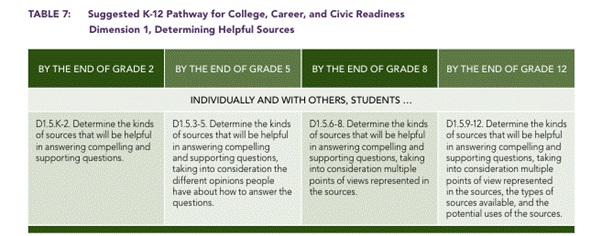
A visible shift in many modern social studies standards is that they treat thinking as part of the content, not an optional add-on. Frameworks like the College, Career, and Civic Life (C3) Framework emphasize an “inquiry arc,” where students learn to:
- build questions
- use disciplinary tools (history, civics, economics, geography)
- evaluate sources
- communicate conclusions
That structure matters because it changes what counts as success in class.
Instead of only recalling what happened, students are asked to defend why a claim is plausible, which evidence supports it, and what would weaken it.
In practice, the curriculum nudges classrooms toward argumentation, corroboration, and perspective-taking, which are core components of critical thinking in the social sciences.
Source: socialstudies.org
How Inquiry-Based Social Studies Builds Critical Thinking Day-to-Day
1) Students Learn to Ask Better Questions Before They Chase Answers
Inquiry begins with “compelling” questions (big, debatable) and “supporting” questions (smaller, researchable).
The educational payoff is that students practice problem-framing, not just problem-solving. Well-framed questions make it easier to spot weak evidence and overly confident claims later on.
In classrooms, that often looks like:
- refining a broad topic (“immigration”) into a testable question (“How did immigration policy change local labor markets in X decade?”)
- predicting what kinds of sources would answer it (laws, census data, oral histories)
- identifying what would count as “good enough” evidence
2) Source Work Becomes a Method, not a Worksheet
Modern curriculum materials increasingly treat sourcing and corroboration as habits:
- Who made this?
- For what audience?
- What was happening at the time?
- What would another source say?
Resources designed to teach historical thinking highlight these routines as central to learning history, not a side skill.
This is one reason social studies can be a natural home for critical thinking.
Students are constantly exposed to incomplete accounts, biased perspectives, and contested interpretations, which forces them to reason under uncertainty instead of waiting for a single “correct” paragraph.

Source: pexels.com
Digital and Media Literacy now Sits Inside Civics, not Outside it
The online information environment is a critical thinking stress test, and social studies is where many schools place civic media literacy. Stanford’s Civic Online Reasoning research found that many students struggled to evaluate online claims and sources, which helped trigger a wave of instructional attention to credibility checks and evidence tracing.
In strong implementations, students practice moves like
- leaving a site to verify it elsewhere
- separating a claim from the evidence provided for it
- noticing when a source is persuasive but not accountable (no method, no data, no track record)
This is also where publishers and professional learning providers can have an outsized impact. ITD World, a global coaching and leadership platform partnering prosperous individuals across the globe, often highlights how structured thinking routines scale across settings, which is the same logic behind building repeatable credibility checks into classroom practice.
Discussion, Disagreement, and “Productive Friction”
A curriculum that aims to shape critical thinkers has to make room for disagreement without turning lessons into ideological theater. The most useful classroom debates are not about who can talk the loudest, but about who can:
- state an opposing view fairly
- identify points of agreement
- revise a claim when new evidence appears
C3-aligned guidance explicitly treats argumentation and communication as outcomes of inquiry, not just presentation skills.
That said, the social studies classroom is also where tensions show up first: community trust, partisan interpretation of current events, and concerns about bias.
Balanced programs usually address this by making the method explicit: teachers are not grading beliefs; they are grading reasoning quality, evidence use, and the ability to distinguish fact, inference, and opinion.

Source: pexels.com
Global Competence and Perspective-Taking as Modern “Civic Reasoning”
Many contemporary social studies curricula connect local issues to global systems. OECD’s PISA describes global competence as the capacity to examine local and global issues, understand perspectives, and engage across cultural differences.
When done well, this expands critical thinking beyond “finding fallacies” into higher-level reasoning: systems thinking, trade-offs, and unintended consequences. That’s how high-performing leaders are born through mentoring and coaching.
When done poorly, it can become vague values language. The difference is whether students are required to work with concrete cases, real constraints, and competing evidence.
What “Good” Looks like in a Modern Social Studies Unit
A refined, research-aligned unit typically includes:
- A clear knowledge spine: essential concepts and background that all students must learn (so critical thinking has something to work with)
- A visible reasoning routine: sourcing, corroboration, causal reasoning, or cost-benefit analysis, revisited across lessons
- A credibility component: explicit practice evaluating information quality, especially online
- A performance of understanding: a written or spoken argument that uses evidence, acknowledges uncertainty, and addresses counterclaims

Source: researchgate.net
The Bottom Line of “Fine” Education
Modern social studies curriculum is shaping critical thinkers most effectively when it combines three forces:
- inquiry structures that teach students how to investigate
- content knowledge that makes reasoning possible
- media literacy that matches the realities of civic life
The science suggests the goal is achievable, but not automatic. Critical thinking emerges when students repeatedly practice disciplined reasoning on rich content, with feedback that rewards evidence, clarity, and intellectual honesty over quick conclusions.
Note: The content on this article is for informational purposes only and does not constitute professional advice. We are not responsible for any actions taken based on the information provided here.