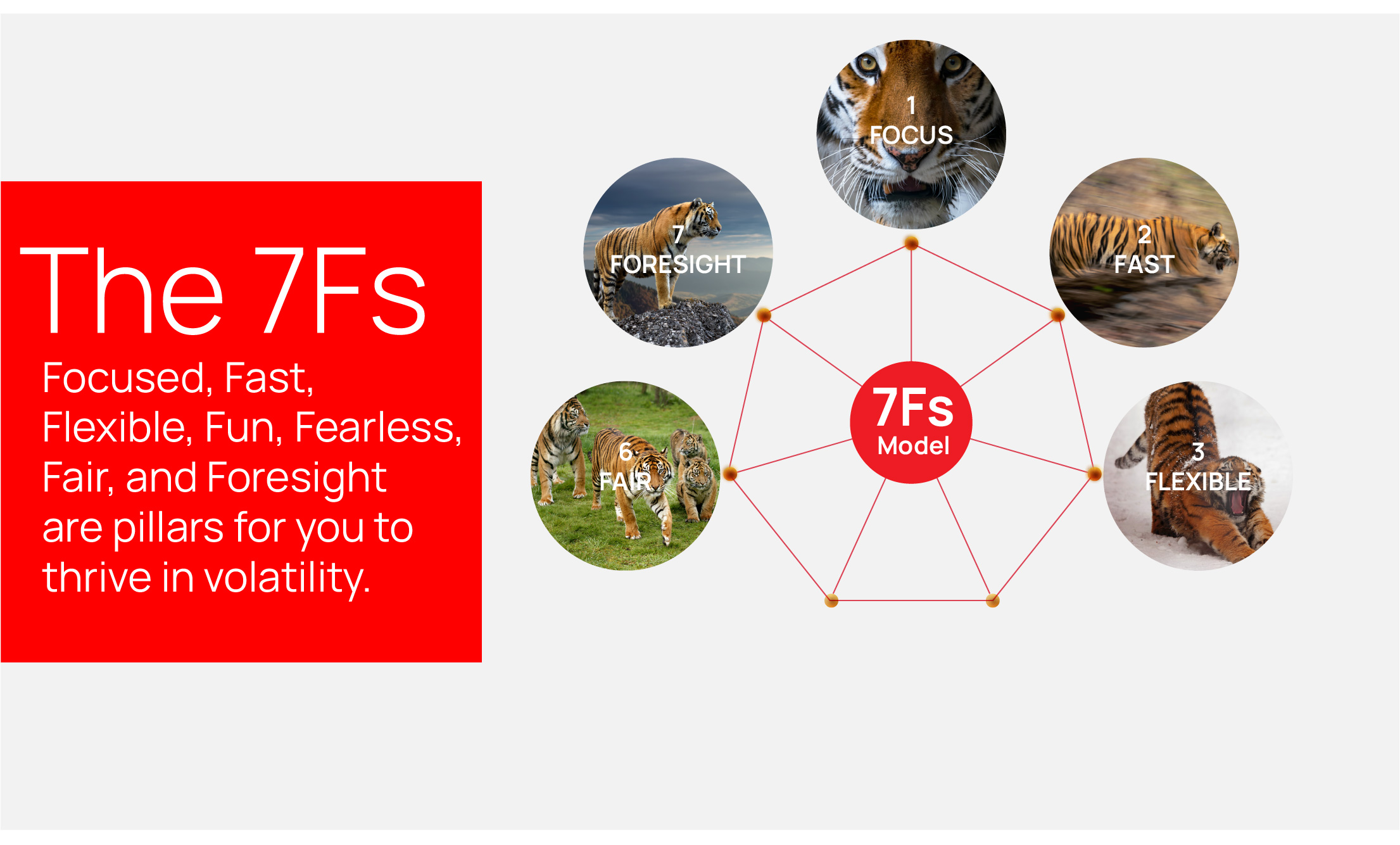
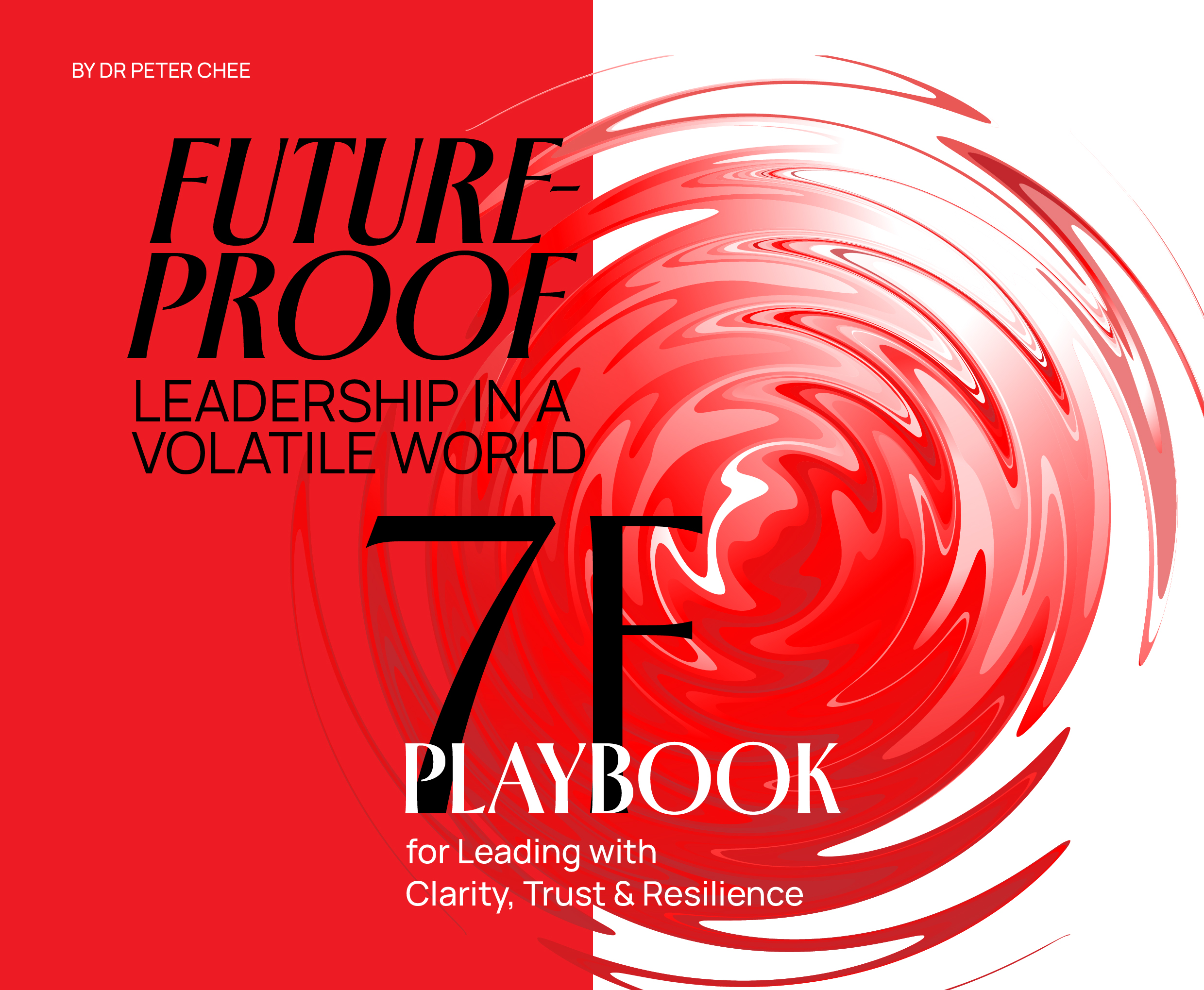
7Fs Playbook for Leading with Clarity, Trust & Resilience

THE WORLD is increasingly more volatile. You face unpredictable markets, alliances that shift, rapid technological changes, and heighten geopolitical risks. Even as uncertainty increases, one thing remains certain; the need for strong leadership that guides and coaches people, teams, and organizations through turbulent times and prepares them for the future.

In challenging times, clarity of thought is crucial. This is where the 7F FUTURE-FIT-FUTURE READY LEADERSHIP MODEL provides guidance for decision-makers like you to lead with trust, impact, and resilience. This framework is a set of leadership principles for navigating uncertainty with agility.

Leadership Asset

THE 7FS MODEL –
A PLAYBOOK FOR LEADING THROUGH UNCERTAINTY


Making decisions quickly isn't the only thing leaders have to do amid uncertainty. Confronting complex realities requires a balanced approach. Doing so nurtures trust and builds adaptability. The 7Fs model, which updates my earlier 5Fs of Leadership Resilience work, enables leaders to act for sustaining morale and growth.

FOCUS – PRIORITIZE WHAT MATTERS MOST


Focus is one of your greatest assets in uncertain times because it's easy to be pulled in multiple directions. The key to remain calm in a sea of chaos is knowing where to direct attention. Focusing means prioritizing what is important. That means concentrating on vital projects or tasks that bring in the desired results. So, focus on tasks and projects with a profound impact and consequence in the near to mid-term future. Focus your energy on successfully completing those that move the needle before moving on to the next. This is about trimming the excess and zooming in on what's most critical to both the immediate and future success of the business.

For your team, focus is bringing their attention and energy back to the purpose, values and vision of the organization. Great things are bound to happen when the entire team is focused on carrying out the mission to bring to life a common compelling vision.

Focus Transformational Coaching Question:
What can you do best to consistently focus on the vitals?

FAST – MAKE QUICK, INFORMED DECISIONS


In volatile times, speed is essential. A note of caution however, speed doesn't mean recklessness. Rather than rushing into decisions without careful thought, leaders create systems that enables quick, yet informed decision-making. By setting up decision-making loops, you can act swiftly when needed, while still ensuring that choices are grounded in the most relevant data available at the time.

Another aspect of "Fast" is being a state of accelerated pivoting. This means accelerating to test your prototype and continuously improving as you go along. Failure can happen but quickly pivot away from what doesn't work to activities which brings in the results you want.

The thinking here is to be fast and effective, not fast and perfect, and not fast but wrong. Ensuring a minimum standard of excellence or product quality is met before rolling out the service or solution. You want to be quick to keep your clients happy, not push them away rapidly.

Fast Transformational Coaching Question:
What can you do to stay fast and accelerate speed for growth and results?

FLEXIBLE – ADAPT TO CHANGE


Flexibility is the key to staying resilient. In today's world, change is the only constant. Leaders who thrive are those who remain adaptable, able to pivot when circumstances shift. Flexibility doesn't mean abandoning plans entirely but rather adjusting strategies and operations to meet new challenges or seize emerging opportunities.

An effective approach to remain flexible is to build conscious agility. This is about staying mentally flexible by adapting and improving to overcome roadblocks along the way. If option A is a no-go, then quickly move on to option B, if that is also a no-go, switch to option C. Being clear on what you want to achieve but also agile enough to find different ways, means, and methods to accomplish the goals.

Conscious agility also means accepting that plans can go off course. Even so, being mindfully aware you can take a detour means you can adopt new technologies, rethink customer engagement, or change operational strategies towards reaching your end goal. In difficult times, it can sometimes feel that the desired results are slow to come by. A state of conscious agility allows you to recognize that the fruit may sometimes take time to ripen for the harvest.

Flexible Transformational Coaching Question:
How can you be constantly flexible to adapt and innovate?

FEARLESS – LEAD WITH COURAGE


Fear can be a powerful force, but it can also paralyze decision-making. To lead effectively, especially in crisis, leaders must be fearless, not reckless. This is about the courage to make tough decisions, speak candidly, and embrace the unknown with clarity. Fearless leadership is about acknowledging the uncertainty, facing it head-on, and leading the charge for positive change.

Another aspect here is acknowledging the fire exists. Yet, you equip yourself properly to put out the fire and coming out still in good shape. Fire and rescue services personnel do this all the time; they rush into burning buildings but are equipped with the right tools to execute their jobs properly.

Leaders who embrace their fear and channel it into actionable courage inspire their teams to do the same. They create a culture where it's okay to take risks, make mistakes, and learn from them. Leadership during tough times requires an unwavering commitment to the organization's values and mission, even when the outcome isn't clear.

Fearless Transformational Coaching Question:
What can you do best to remain fearless in the face of challenge?

FUN – ENERGIZE YOUR TEAM


It's easy for morale to dip in times of stress. But even during difficult moments, fun and connection are integral to long-term success. Encouraging a sense of joy can help to lift spirits and keep the team motivated. Fun is not about ignoring the challenges, it's about providing a sense of renewal and positive energy that supports productivity and wellbeing.

One way to bring in happiness is to embrace an attitude of gratitude. Being grateful is a powerful driver for mental and emotional well-being. By being grateful, you are putting your attention on the bird already in your hand and not the two birds in the bush. How do you bring in more gratitude and more joy? You can start a gratitude journal where you record down the things you are thankful for each day. People who have started one have shared with me that they feel more upbeat. This is why gratitude is often called the mother of all virtues.

Fun Transformational Coaching Question:
How can you sustain more fun, joy, and high engagement on the journey to success?

FAIR – BUILD TRUST WITH INTEGRITY


Trust is always critical, but it's especially vital during times of uncertainty. The foundation of trustworthy leadership is built on integrity, and consistent communication. Leaders who appear inconsistent breed mistrust and anxiety within their teams.

On the other hand, leaders who practice integrity and build trust stand for something, keep commitments to themselves and others, and remain open to honest communications. They constantly "walk the talk". Relationships based on integrity are the ones in which people are real and don't have to pretend to do something or be someone else.

Fair leadership also means being honest about challenges and offering a clear rationale for the decisions being made, even when those decisions are tough. When employees understand the "why" behind difficult choices, they're more likely to stay engaged and motivated. Trust is also reinforced when leaders show empathy and make choices that prioritize the well-being of their teams.

Fair Transformational Coaching Question:
What will you do to maintain high trust by being fair & caring towards people?

FORESIGHT – PREPARE FOR THE FUTURE


Foresight is about seeing around the corner and preparing for what's coming next, even when the future is uncertain. When you can anticipate trends, both positive and negative, you are in a good position to act when opportunities arise and mitigate risks before they spiral out of control. Foresight isn't about predicting the future perfectly; it's about creating a framework for scenario planning, where various outcomes are considered, and responses are already in place.

With foresight, leaders can make smarter, more informed choices, ensuring the organization is prepared for whatever challenges lie ahead. Jumping the S-Curve is about being proactive, not reactive, and ensuring the team is ready for the next wave, whether that wave is one of opportunity or challenge.

Foresight Transformational Coaching Question:
How can you enable effective foresight to keep leading ahead of the curve?

More resources available at: