Embrace Feedback To Truimph

By Dr Peter Chee and Dr Jack Canfield

Listening to people giving feedback may be a jarring experience. Getting an impromptu, or unasked for, mini-performance review is not an enjoyable experience for many. Nonetheless, as management guru Ken Blanchard notes, champions feast on feedback for breakfast.

This is because feedback is not inherently negative, and can be viewed in a positive light. Feedback becomes the base for performance improvement. During coaching conversations, feedback that is structured around whether the coachee is staying the course or drifting away is valuable to ensure they are on track.

Feedback is the Breakfast of Champions.

– Ken Blanchard

When feedback is given this way, the coach acts as a mirror. In this way, the coachee is shown their current status, what level of performance they are now in, and what improvements they can make. By guiding people to discover what is in front, feedback becomes a valuable tool in your coaching conversations.

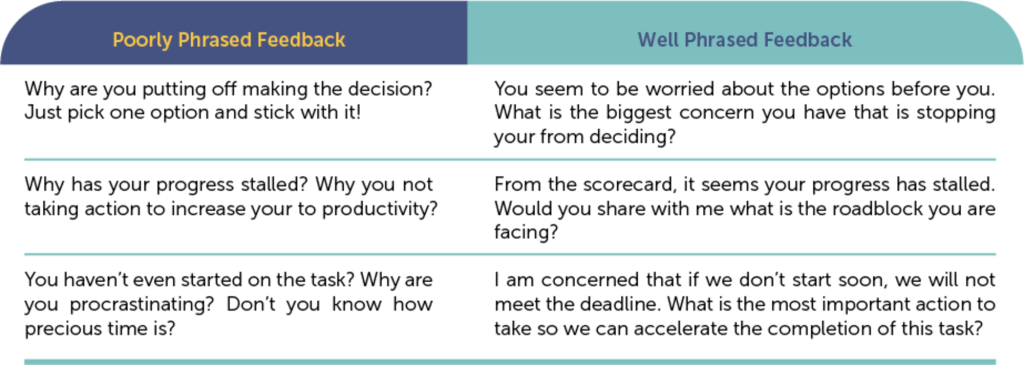
The question to ask then is “How do coaches give effective feedback?” It all boils down to intent. When the intention is clear and pure to want the best for the other person, the likelihood of success is higher. Conversely, if the intention is to belittle and humiliate the other person, then the possibility of failure increases. To get a better idea, reflect on the following examples on giving feedback about someone who has the habit of procrastinating.

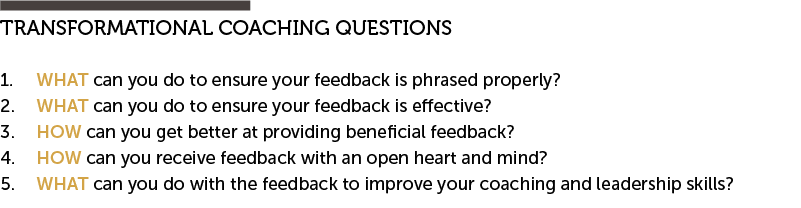
As seen in the examples, feedback followed by a question helps the coachee identify the solutions to the issues before them. Give them time to process and reflect given, then guide the conversation with powerful questions to trigger their creative mind so they can think of what they can do to resolve the problems they face.

Ben, the general manager of a logistics company, suddenly asked feedback about his relationship with the direct reports during a coaching conversation. Taking this opportunity to add value to the session, the coach first got Ben to be held accountable to the feedback that was solicited from others at an earlier time.

Remember no one can make you feel inferior without your consent.

– Eleanor Roosevelt

“I highly appreciate your wanting feedback on your performance. Before giving you the feedback, what is your commitment to take the feedback openly and work on the areas that make sense to you?” the coach asked.

Upon getting a positive response, the coach shared with Ben the feedback gathered. After listening to what the coach shared, Ben felt he was on the right track. The feedback signaled that he was on the right track, and provided information on areas for improvement. The coach meanwhile, ensured the feedback given was done in a warm and diplomatic manner without assigning blame or surfacing criticism.

Now, what about the times when coaches received feedback from the coachee, how should the coach react? Remember that feedback is a two-way street, if the coach can give feedback, then the coachee is allowed to do so too.

Upon receiving feedback, a good coach automatically adopts the mindset that the feedback is coming from a good place. With this mental attitude, the coach is open to improve their coaching skills by listening intently to what is said, and to ask questions to get a better understanding of what gaps may need to be close. As a coach, you would want to thank the person who gave the feedback and offer your appreciation. Respond to the feedback given by making improvements where necessary, and use the feedback to your advantage to continuously become a better coach.

Watch #1 Strategic Innovation Coach and ITD World CEO Dr Peter Chee shares how he influenced a senior executive who was resistant to transform to receive feedback from his team that enable positive transformation. You can watch the full story when you enroll in the CCMP program today.

LATEST HAPPENINGS

5 Levels of Mastery for Love, Happiness, and Success

Get a head start by unleashing your potential to live an abundant life with the 5 Levels of Mastery!

This book by Dr Peter Chee, Dr Marshall Goldsmith, and Aaron Ngui, is written to serve as your compass, companion, and coach in your life’s voyage for obtaining love, happiness, and success in abundance.
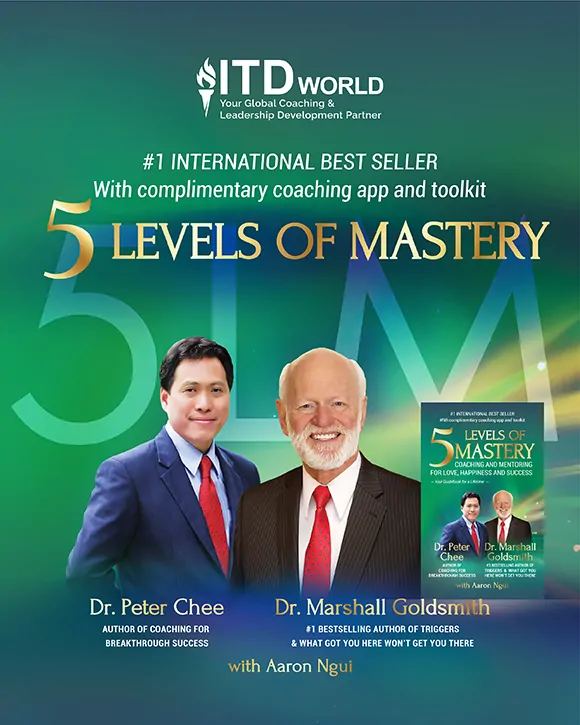
This book synergizes the expertise and learning from people like Peter Drucker, Zig Ziglar, Tony Buzan, Stephen Covey, Warren Bennis, Paul Hersey, and Jim Rohn among many others, and is based on extensive research and practice in coaching, mentoring, training, and developing leaders in over 80 countries for more than 30 years.

Drawing from the wisdom of these time-tested lessons, the authors have developed powerful approaches, models, and best practices that supports leaders worldwide achieve transformational growth.

Those who embrace the 5 Levels of Mastery develop empowering habits, find joyful purpose, and live fulfilling lives that inspire others.

Get ready to take the first step on your part to Mastery @ Amazon!

Everyone Can Coach for a Better World

LETs LEAD app enables powerful coaching every time, everywhere and everyone. Use the app to inspire people to bring out the best in people so they lead their best lives. Leverage on powerful tools to help individuals discover their life purpose, set compelling goals, create actionable plans, foster personal and professional growth, and unlock their full potential, making a positive impact on the world.

LETs LEAD contains eight game-changing systems to give you the power of coaching in the palm of your hand. These are crafted to drive motivation, learning, and results for growth and development. Download LETs LEAD today to experience tailored experiences in gaining insights, developing new skills and transforming lives.

FURTHER RESOURCES